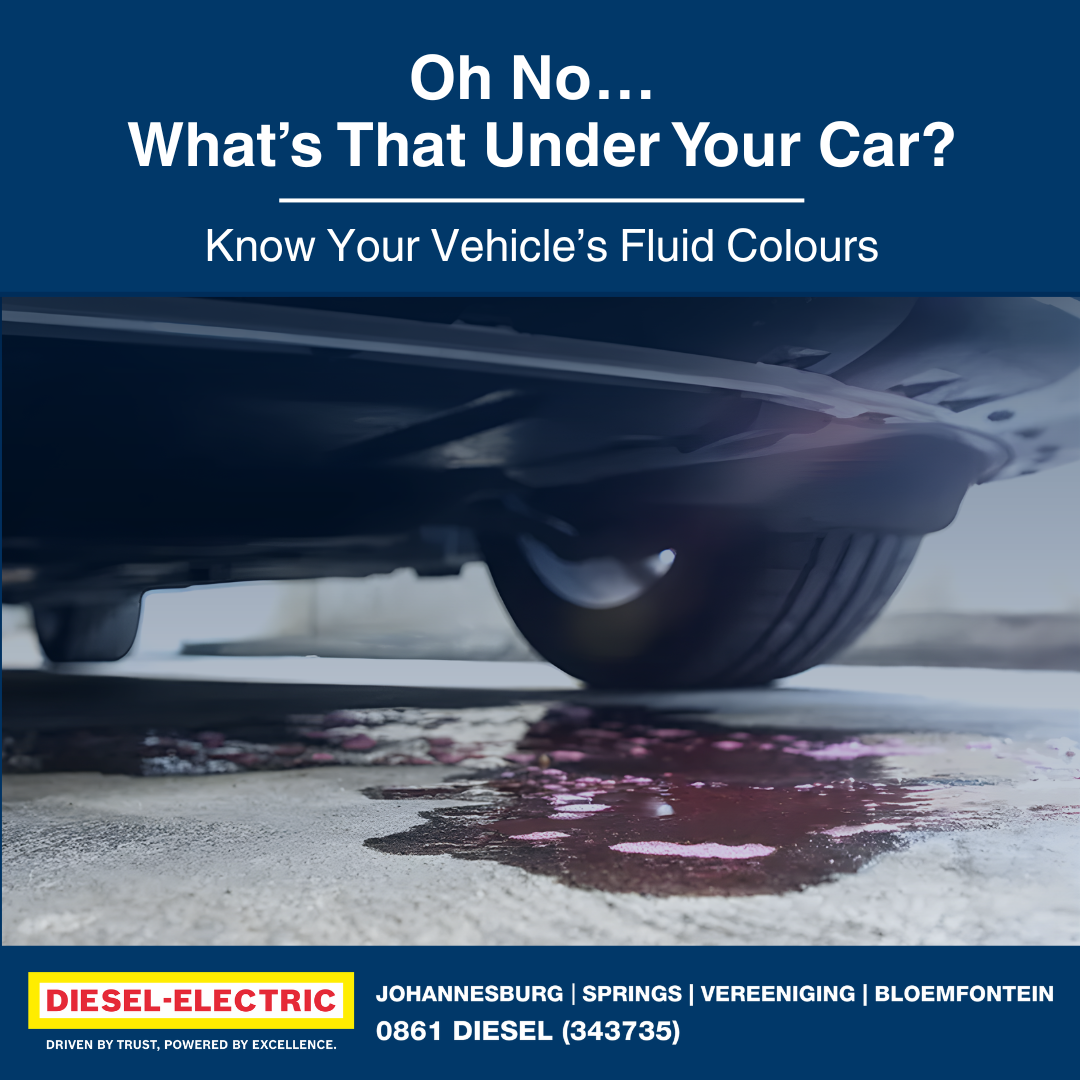
Why Fluid Leaks Should Never Be Ignored
You walk out to your vehicle and notice a patch on the ground. It might seem minor, but a car leaking fluid is often an early warning sign of a bigger problem.
Vehicle fluids play a critical role in cooling, lubricating, and protecting key components. When levels drop due to a leak, parts can wear faster, overheat, or fail completely.
The good news is that the colour of the fluid can help you quickly identify what might be wrong and how urgent it is.
Car Fluid Leak Colour Guide
Dark Brown or Black: Engine Oil Leak
Most likely: Engine oil
Fresh engine oil is usually golden but turns dark brown or black over time as it circulates through the engine.
Common causes:
- Worn gaskets or seals
- Oil pan leaks
- Loose or damaged drain plug
Engine oil leak symptoms:
- Dark puddle under the engine
- Burning oil smell
- Low oil warning light
Can you drive?
Only for a short distance. Low oil levels can cause serious engine damage if ignored.
Red or Pink: Transmission or Power Steering Fluid
Most likely: Transmission fluid leak or power steering fluid
These fluids are typically red or pink to make leaks easier to identify.
Where you might see it:
- Centre of the vehicle: possible transmission fluid leak
- Front of the vehicle: possible power steering issue
Signs to watch for:
- Slipping gears
- Delayed gear changes
- Heavy or stiff steering
Can you drive?
Not for long. Low levels can lead to overheating, poor performance, and component damage.
Green, Orange or Yellow: Coolant Leak
Most likely: Coolant
Coolant regulates engine temperature and prevents overheating. If your car is leaking coolant, it needs attention quickly.
Coolant leak signs:
- Bright green, orange, pink, or yellow fluid
- Sweet smell
- Rising temperature gauge
Common leak points:
- Radiator
- Hoses
- Water pump
- Reservoir
Can you drive?
No. A coolant leak can quickly lead to overheating and serious engine damage.
Clear to Light Yellow: Brake Fluid Leak
Most likely: Brake fluid
Brake fluid leaks are serious and should be treated as urgent.
Brake fluid leak symptoms:
- Fluid near a wheel or under the driver’s side
- Soft or spongy brake pedal
- Reduced stopping power
Can you drive?
No. Loss of brake fluid can lead to brake failure.
Clear Water: Air-Conditioner Condensation
Most likely: Water from the air-conditioning system
If the liquid is clear and appears after using your air-conditioner, it is usually just condensation.
Can you drive?
Yes. This is normal and not a fault.
Does the Size of the Leak Matter?
Yes. The size and frequency of the leak can tell you how serious the issue is.
- Coin-sized spot:
Often minor seepage or condensation. Monitor it. - Coffee mug-sized patch:
An active vehicle fluid leak that should be checked soon. - Large puddle (side-plate size):
A significant leak that needs immediate attention. - Constant dripping:
Urgent. Especially if warning lights appear or the vehicle starts overheating.
When Should You Take Action?
You should have your vehicle checked as soon as possible if you notice:
- Repeated fluid patches under your car
- A car leaking oil under the engine
- Signs of overheating
- Changes in braking, steering, or gear shifting
Early action can prevent more serious damage and reduce repair costs.
The Bottom Line
A vehicle leaking fluid is not something to ignore. While some leaks are harmless, others can lead to costly repairs or safety risks if left unchecked.
Understanding the colour of the fluid gives you a quick, practical way to assess the situation.
If you are unsure, it is always better to have it inspected and use the correct, high-quality parts to keep your vehicle running safely and efficiently.
Get the right parts for your vehicle. Contact a Diesel-Electric Automotive expert today.
Browse our range of maintenance and service parts to keep your vehicle running reliably.
Frequently Asked Questions
What fluid is leaking from my car?
The colour helps identify the fluid. Black usually means engine oil, red indicates transmission or power steering fluid, green or orange points to coolant, and clear fluid could be water from the air-conditioner.
Can I drive if my car is leaking oil?
You may drive a short distance, but it is risky. Low oil levels can cause serious engine damage if not addressed quickly.
What colour is coolant in a car?
Coolant is typically green, orange, pink, or yellow. The exact colour depends on the type used in your vehicle.
What causes a vehicle to overheat?
Common causes include coolant leaks, low coolant levels, faulty components like the radiator or water pump, or restricted airflow through the cooling system.