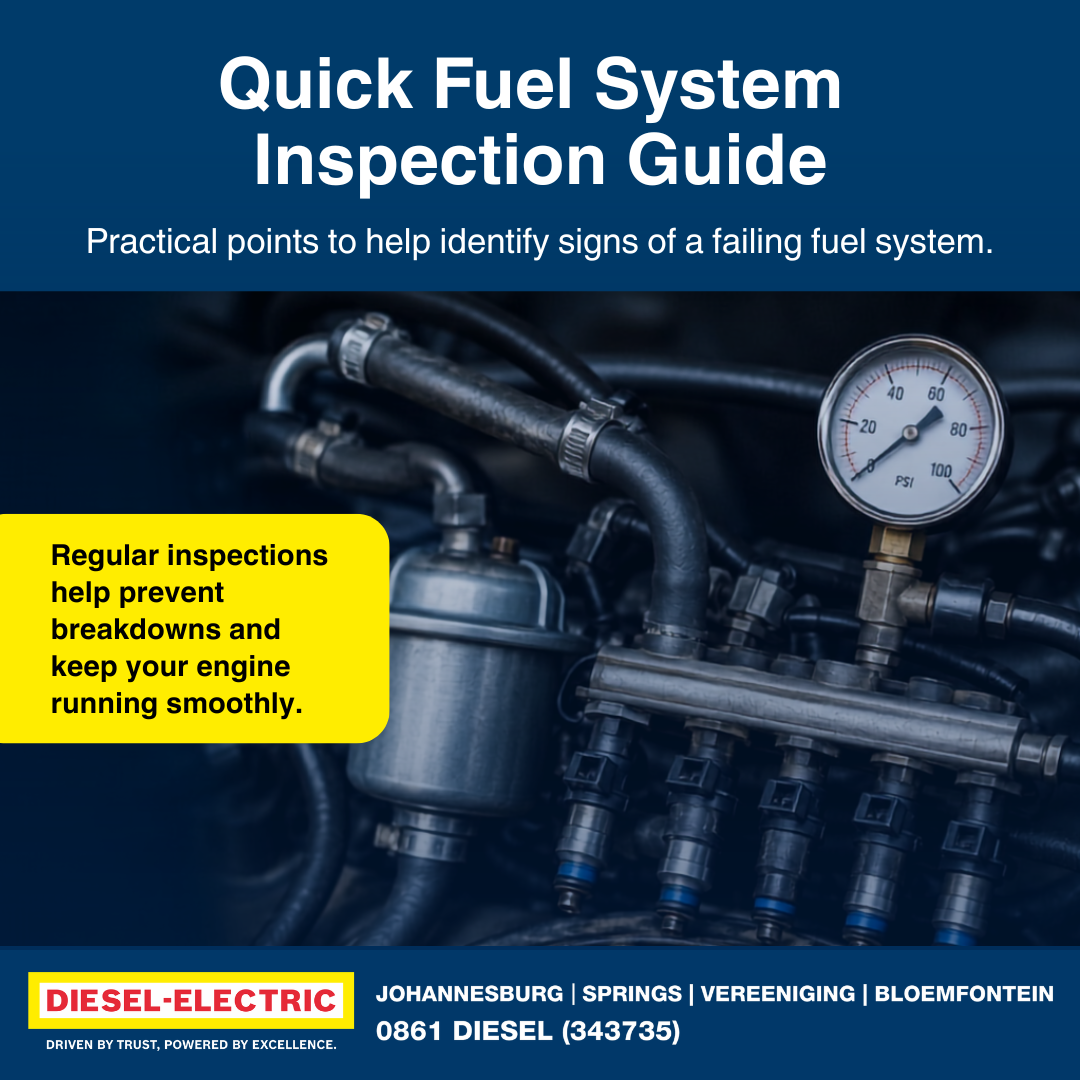
Fuel system concerns can be frustrating for customers, workshops, technicians, fleet operators and vehicle owners. Symptoms such as difficult starting, poor performance, fuel odours, uneven running or reduced efficiency may point to several possible causes.
This diagnostic checklist is designed to help identify signs that may require further inspection. It does not replace a professional diagnosis, but it can help narrow down possible fuel system concerns before seeking expert support or replacement parts.
At Diesel-Electric Automotive, we believe in practical guidance, professional service and dependable support. Driven by Trust. Powered by Excellence.
Start With Visible Fuel Leaks
A fuel system inspection should begin with a careful visual check. Look for signs of fuel around hoses, connections, filters, seals and accessible fuel system components.
Possible signs to check:
- Fuel smell around the vehicle
- Wet marks near fuel lines or fittings
- Staining around connections
- Cracked, damaged or worn hoses
- Loose or poorly seated connections
Fuel odour may also come from a leak or vapour/EVAP-related issue, depending on the vehicle. Not every fuel smell means visible liquid leakage. Any sign of fuel leakage should be treated carefully. Where safety is a concern, stop further use and seek expert support.
Check Fuel Lines and Connections
Fuel lines and connections are exposed to vibration, heat, age and general operating conditions. Over time, this can contribute to wear or damage.
During inspection, check whether fuel lines appear secure and correctly routed. Also look for signs of rubbing, kinks, corrosion, hardening or visible damage.
These checks can help narrow down possible concerns, but any part replacement or fitment decision should be confirmed by a suitably qualified technician.
Inspect the Fuel Filter Area
A fuel filter plays an important role in protecting the fuel system from contaminants. If there are concerns around fuel flow, performance or starting, the fuel filter area is worth inspecting.
Check for:
- Signs of leaks around the filter housing
- Incorrect fitment or poor sealing
- Visible damage
- Contamination around the filter area
A blocked or poorly fitted filter may contribute to performance issues, but further inspection may be needed before confirming the cause.
Look for Fuel Contamination Signs
Fuel contamination can affect system performance and may lead to further component concerns. Depending on the vehicle and system type, contamination may include dirt, water or other unwanted material.
Possible warning signs may include:
- Rough running
- Hard starting
- Loss of power
- Stalling
- Irregular performance under load
If contamination is suspected, professional service is recommended before replacing parts. This helps reduce the risk of repeated issues.
Listen for Unusual Operating Symptoms
Not every fuel system concern is visible. Some issues may appear as changes in how the vehicle starts, idles or performs.
Watch for:
- Longer cranking before start-up
- Uneven idle
- Hesitation during acceleration
- Loss of power
- Unusual sounds from the fuel system area
- Warning lights or fault codes where applicable
These symptoms can have more than one cause. A diagnostic checklist can help guide the inspection process, but it should not be treated as a guaranteed diagnosis.
Review Fuel Pump and Delivery Concerns
Fuel delivery concerns may affect how consistently the engine receives fuel. If the vehicle struggles under load, cuts out or has repeated starting issues, or makes abnormal pump noise, fuel delivery should be considered as part of the inspection.
Checks may include:
- Fuel pump operation symptoms
- Electrical connection condition
- Signs of poor fuel supply
- Related filter or line restrictions
- System-specific diagnostic checks (pressure, flow, electrical supply)
Because fuel delivery systems vary by vehicle, expert support is important when confirming the correct replacement parts.
Check for Warning Lights and Fault Codes
Modern vehicles may provide useful diagnostic information through warning lights or stored fault codes. These can help guide further inspection, but they should be interpreted carefully.
A fault code may point towards a system area, but it does not always confirm the exact failed component. Technicians should combine diagnostic readings with practical inspection, vehicle history and component checks.
This helps support a more accurate repair approach.
Confirm Part Fitment Before Replacement
When replacement parts are required, correct fitment matters. Fuel system components can vary by vehicle application, engine type and system specification.
Before replacing a part, confirm:
- Vehicle details
- Part application
- Fitment requirements
- Related components that may need inspection
- Any technical guidance required
Diesel-Electric Automotive supports customers with expert service and replacement parts guidance to help with the right part selection.
Know When to Seek Expert Support
A checklist is useful for identifying signs and narrowing down possible concerns, but fuel system inspection often requires professional tools, technical knowledge and safe working practices.
Seek expert support when:
- Fuel leaks are suspected
- A warning light or fault code appears
- Fuel contamination is possible
- A part replacement is being considered
- The fault is intermittent or difficult to confirm
- Safety or fitment is uncertain
Diesel-Electric Automotive is a trusted partner for customers, workshops, technicians, fleet operators and vehicle owners who need dependable support and professional service.
Conclusion
A practical fuel system inspection can help identify warning signs early and support better repair decisions. By checking for leaks, line condition, filter concerns, contamination signs, performance symptoms and fitment requirements, customers and technicians can narrow down possible fuel system concerns before taking the next step.
For expert support and replacement parts guidance, contact Diesel-Electric Automotive.
Quality parts. Expert service. Delivered.
Frequently Asked Questions
What should be checked during a fuel system inspection?
Can a diagnostic checklist confirm the exact fuel system fault?
No. A diagnostic checklist can help identify signs that may require further inspection, but it should not be treated as a guaranteed diagnosis. Expert support is recommended where safety, fitment or replacement parts are involved.
When should I contact Diesel-Electric Automotive for fuel system support?
Contact Diesel-Electric Automotive when fuel system symptoms are unclear, replacement parts may be required, or professional service and expert support are needed.