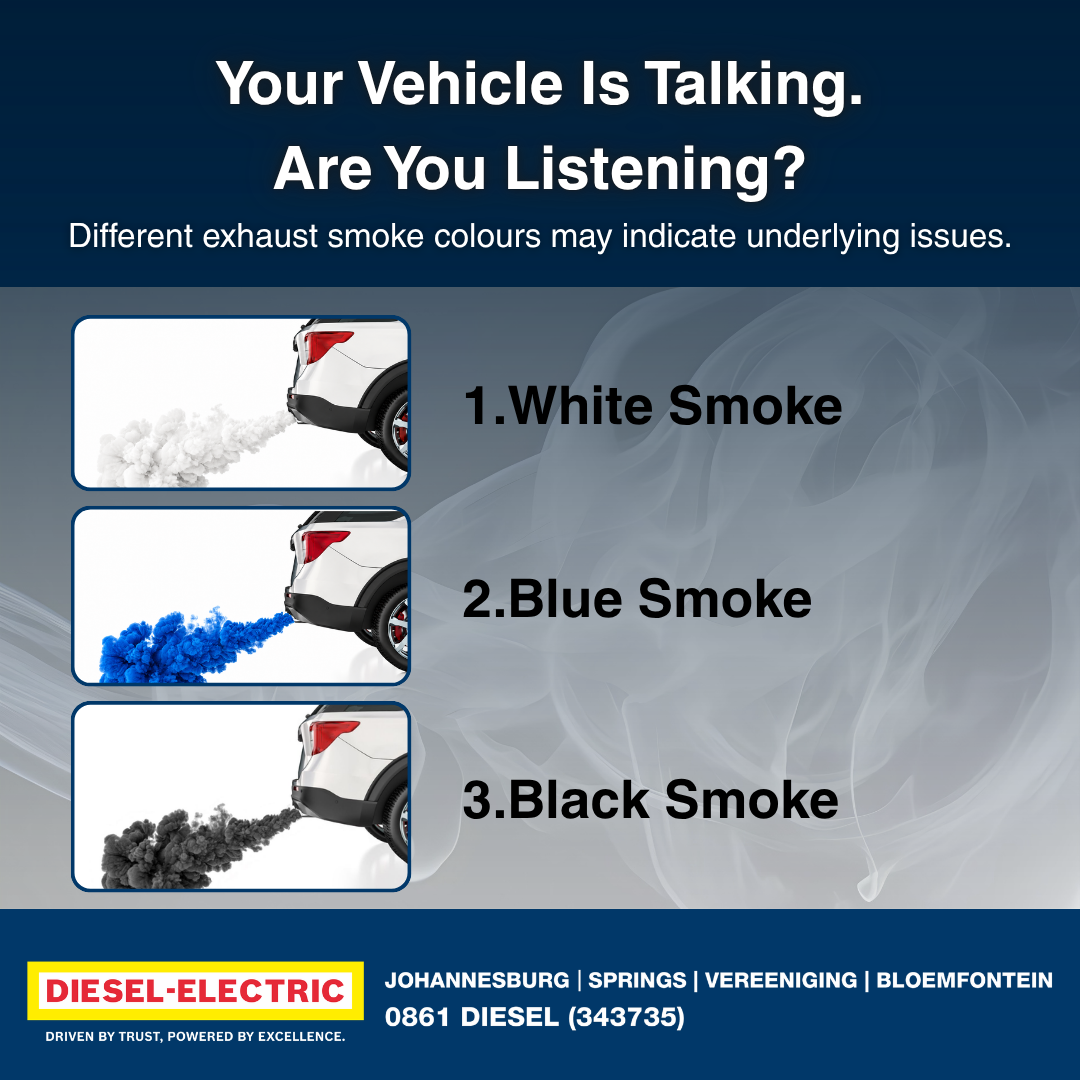
Your vehicle can provide useful warning signs when something is not operating as expected. One of these signs is a noticeable change in the colour, thickness or duration of its exhaust smoke.
White, blue and black exhaust smoke may point to different conditions, but smoke colour alone cannot confirm a mechanical fault. A professional vehicle inspection is the most reliable way to identify the cause and decide what action may be required.
What Do Different Exhaust Smoke Colours Mean?
Exhaust smoke colour |
What it may indicate |
Recommended next step |
|---|---|---|
| White | Temporary condensation or another condition requiring assessment | Monitor the smoke and arrange an inspection if it continues |
| Blue | Oil may be entering the combustion process or there may be a turbocharger-related concern | Arrange a professional inspection |
| Black | Incomplete fuel combustion or another engine-performance concern | Have the vehicle professionally assessed |
These are general indicators, not confirmed diagnoses. The cause can vary according to the vehicle, engine type and operating conditions.
What May White Exhaust Smoke Indicate?
A small amount of thin white exhaust smoke during a cold start may be caused by condensation. This is often temporary and should reduce as the engine warms up.
Persistent, thick or excessive white smoke may indicate that further investigation is needed. Rather than assuming the cause, have the vehicle inspected by a qualified automotive professional.
Pay attention to:
- Whether the smoke disappears after the engine warms up
- How thick the smoke appears
- Whether it continues while driving
- Whether there are other changes in vehicle performance
What May Blue Exhaust Smoke Indicate?
Blue exhaust smoke may indicate that oil is entering the combustion process. It could also be associated with a turbocharger-related problem.
Several different conditions can contribute to blue smoke, so it should not be treated as a diagnosis on its own. Continuing to drive without investigating the cause may allow the underlying problem to worsen.
Arrange a professional vehicle inspection if blue smoke:
- Appears repeatedly
- Continues after the engine has warmed up
- Becomes thicker or more noticeable
- Appears together with changes in engine performance
What May Black Exhaust Smoke Indicate?
Black exhaust smoke may point to incomplete fuel combustion or another concern affecting engine performance.
A brief amount of smoke under certain operating conditions may not identify a specific problem. However, persistent or excessive black smoke should be professionally assessed.
Prompt attention may help identify the cause before it leads to further complications.
When Should Exhaust Smoke Be Inspected?
Consider arranging an inspection when the smoke:
- Persists after the engine has warmed up
- Becomes unusually thick or excessive
- Appears regularly while driving
- Changes suddenly in colour
- Occurs together with reduced performance or other warning signs
Avoid relying on smoke colour alone to diagnose the vehicle. The same colour can have more than one possible cause.
Why Professional Vehicle Inspection Matters
A professional vehicle inspection considers more than the colour of the exhaust smoke. A qualified technician can assess the relevant systems and investigate the underlying cause. You can also explore Diesel-Electric Automotive’s maintenance and service parts for more information on vehicle maintenance support.
Early assessment can provide greater clarity and help you make an informed maintenance decision.
Diesel-Electric Automotive provides practical guidance, dependable support and expert service to help keep customers moving.
Noticed persistent white, blue or black exhaust smoke? Contact Diesel-Electric Automotive for guidance on the next step.
Driven by Trust. Powered by Excellence.
Frequently Asked Questions
What may white exhaust smoke indicate?
White exhaust smoke may be caused by temporary condensation during a cold start. If it remains thick or continues after the engine has warmed up, arrange a professional inspection.
Is blue exhaust smoke serious?
Blue exhaust smoke may indicate that oil is entering the combustion process or that there is a turbocharger-related concern. A professional inspection is recommended to identify the cause.
What should I do if my vehicle produces black exhaust smoke?
Persistent black exhaust smoke may point to incomplete fuel combustion or another engine-performance concern. Have the vehicle professionally assessed rather than relying on smoke colour alone.
Can exhaust smoke colour diagnose a vehicle problem?
No. Exhaust smoke colour can provide an indication, but it cannot confirm the underlying fault. A professional vehicle inspection is needed for an accurate assessment.